


At university I wrote my thesis on kitsch in the prose of Tadeusz Konwicki. Kitsch in general is a great passion of mine. A reason for quite a lot of pondering. I had a conversation with Professor Maria Poprzecka in 2009. It was an extraordinary event for me, which is why I am posting the conversation here on my blog. Maybe it will inspire someone?
Marta Janik: I know that you do not like to lecture people and show them what is art and what is kitsch. So what is the role of the art historian in (so-called) ordinary people’s lives?
Maria Poprzęcka: There are a great many people who simply want to know when something was made, who made it, the life story of an artist. In the popularisation of art, the idea that the artist expresses himself and that through the work of art we can get to his psyche and vice versa: we want to know the life stories of the artist, because they can explain the work to us. Art historians do a lot in this direction. The history of art has, of course, imposed both a value system and canons and, most importantly, imposed a certain way of seeing. It was often a popularisation of ‘how to look at a work of art’, strongly didactic: you have to see like this and like that, this is good, this is bad, this is pink, this is green… I don’t like that. Art history can live by itself. It is mischievously called Kunst Geschichte Ohne Kunst – art history without art. When art historians deal professionally with an issue, it is a field that looks at itself very much and is terribly self-critical. But when art history addresses the so-called general public, it should balance in a very clever way. Dispense didacticism, because people need it, they need information, but also leave a large margin for their own tastes, feelings and also for their own creativity. We have known for a long time that a work of art does not exist without the eyes that look at it; it only comes into being through contact with the viewer.
A painting that no one sees, that languishes in a museum somewhere, is simply a piece of canvas smeared with some kind of grease. A work of art is created when there is contact between the one for whom it was created, i.e. the viewer, and the inanimate object. Otherwise these paintings are empty, silent, dead. In this case, art history should intervene very gently. I know that there are art historians who think that people should be taught to look and judge. I think they should rather be clued in, given some information, but left with a very large room for co-creation of the work. The history of art, also the history of the reception of different works, which have been very differently assessed over the centuries, shows that these things are changeable. It is not the case that something that has once and for all been hailed as a masterpiece will forever remain a masterpiece, and something that has been called kitsch or a worthless thing will forever remain so. These fluctuations are considerable. We should show more modesty, more humility and allow people (even uneducated people) to like what they like. Anyway, at the moment, such a boundary between high and low art, between masterpieces and kitsch is, especially by contemporary art, very brutally blurred. Let me give a fairly fresh example. An absolutely fantastic one!
Namely, in 2008, an exhibition was opened at Versailles by Jeff Koons, the master of kitsch, with his inflatable rabbits, with porcelain figurines depicting Michael Jackson playing with his favourite monkey, with a repertoire of classical kitsch, because he deliberately plays with this repertoire, of course. All of this was allowed into the sacred, reverential, grand salons of Versailles, into those gilding, into those chandeliers, into those paintings, sculptures, into the incredibly bloated political programme that Versailles pursues. On the one hand we had the pomp of courtly art, for it is hard to find a better example of pompous courtly art than the interiors of Versailles and on the other a pink inflatable rabbit or an inflatable balloon in the shape of a mirror, which further multiplied the hall of mirrors. In the gardens of Versailles, which are renowned for the craftsmanship of their gardeners, a huge statue of neither rabbit nor dog was erected, a teddy bear made of geraniums… This is obviously a mockery of this horticultural craftsmanship too. The juxtaposition of flagship kitsch, self-conscious kitsch (“I’m making kitsch and what are you going to do to me?”) with the dignity of great art caused both French museum professionals and the public to be dramatically divided.
There were both supporters of what happened at Versailles, this thumb in the nose at high art, the pompous art of the court, and opponents who thought it was a degradation, a scandal and desecration of high art, because it was no longer about Versailles itself, but about relativism, showing that everything is worth the same or worth nothing at all. However, the exhibition was so successful that it was extended and closed only in the first days of January this year! This is, of course, an extreme example, but a great deal of art, especially of the second half of the 20th century and also of culture, more or less demonstratively shows that there are no such divisions. From pop art onwards we see how museum art, canonical art feeds on pop culture and on the other hand pop culture plays freely with masterpieces. Let’s see what happens with the Mona Lisa.
What do you think, is it possible to make kitsch out of everything and are you not outraged by the opinion that Duchamp’s urinal is kitsch?
No. I think Duchamp would have been delighted. With his predilection for paradoxes, for mischief, for perversity, he would have been delighted. The urinal can be called the kitsch of modernity. Everything can succumb to kitsch when it is rectified, trivialised, abused. Duchamp seems to have planned this.
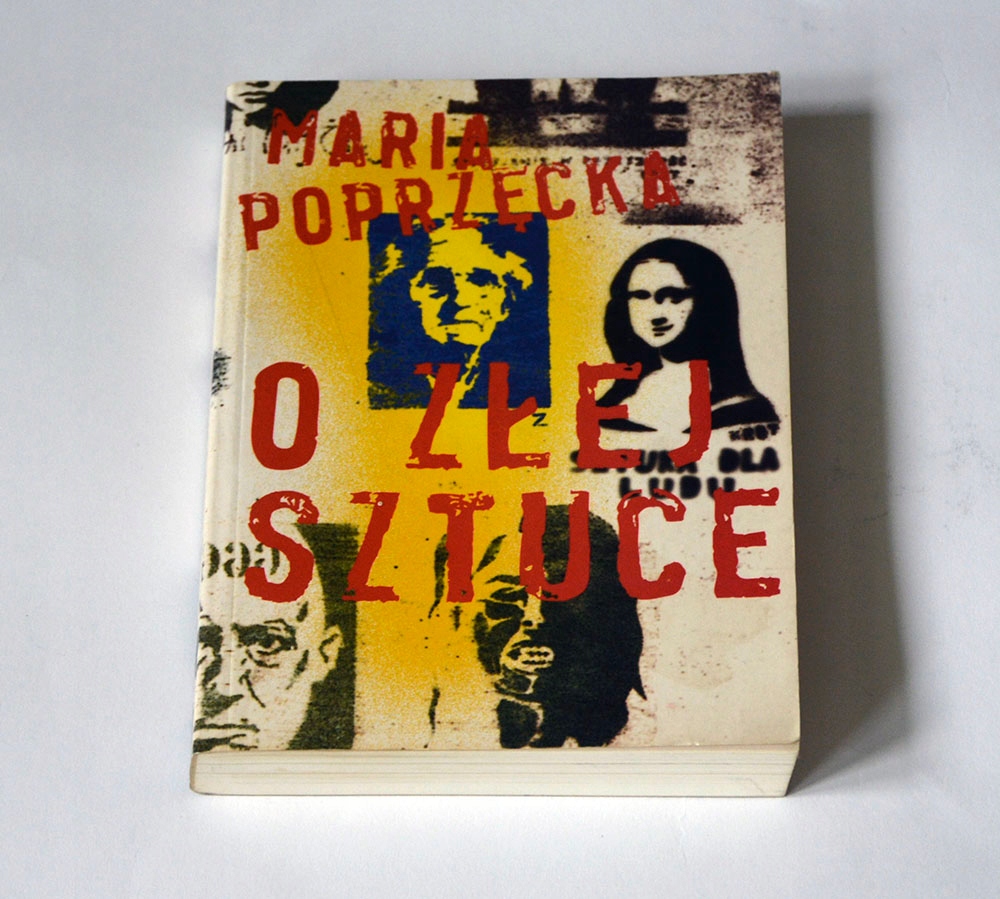
Your book “On Bad Art” was written 25 years ago. Which of its theses do you disagree with now?
In that book, I manifested more or less the same attitude as I do now, that is, an attitude of a certain liberalism not to lecture, not to impose a certain hierarchy. I pointed out there that so-called good taste, good taste are things that are very difficult to learn and that it is one of the quite perfidious hidden ways of building inequality between people. We can always ridicule someone, discredit them because they have made a mistake in the way they furnish their home or even in the way they choose their clothes, because they have lost their straw. At the moment, art has simply changed a lot, the world has changed a lot. The boundary between high art and popular art is blurring, as well as alternative art or culture, counterculture – it’s all very mixed up in the contemporary world and I don’t see it as a disaster, absolutely not.
So is a definition of art needed at all and, by extension, is a definition of kitsch needed?
In my opinion, no. In the 1960s-70s the issue of kitsch, to put it noisily, was incredibly alive. A few such books were written, which were translated much later and therefore gave the false impression that it was still a live issue, while the world had changed a lot in the meantime. Such wailing over kitsch, condemning kitsch or seeing it in terms of a cultural catastrophe – this was dominant at the time, whereas at the moment it seems to me that no one is writing such books any more. What we could read in Ludwik Giesz’s or Herman Broch’s works, where buildings such as the Congress in Washington or the Cathedral in Brazil were condemned, where remedies were given, that all you needed was a bit of dynamite and it would be over… I don’t know how, in the name of high art, you can imagine blowing up buildings which embody extremely important values. After all, we know what the US Congress building is to American democracy or what a cathedral in Brazil is to that very Catholic and pious society. No matter in which field it manifests itself, if fundamentalism (or radicalism) suddenly appears among artistic concepts, then it becomes just as dangerous as political or religious fundamentalism.
An indisputable example of kitsch – is there such a thing for you?
My views haven’t changed much since I wrote my book ‘On Bad Art’. For me, kitsch is not an innocent dwarf standing in the garden, but something that is very similar to art. What you sometimes see in galleries, sometimes even in museums, which pretends to be art, is very similar to art, but is not art. The dwarf does not pretend to be anything, even though it is considered the flagship of kitsch. The boundary is extremely thin and it takes a professional to sense the falseness. For me, something that is wrong is not a denial of art, but of truth, and it is precisely this kind of falsehood smuggled under the cloak of art that I react very badly to.
That is, kitsch is definitely a negative concept.
Yes. I believe that the Platonic triad of values: truth, goodness and beauty are intertwined. Of course, we can understand beauty in very many ways. Duchamp’s fountain was also beautiful. On the other hand, if something is untrue it is infectious. Something that is untrue cannot be truly beautiful and it cannot be good either.
And what guidance would you give to a mere mortal? How is he supposed to recognise the Platonic triad that you mentioned? When he stands in front of a painting, how is he supposed to know if it is art or just something that pretends to be art? After all, it is often the case that cheap views are more moving than so-called high art.
And very well. And why should they not be moved? Everyone is entitled to their own taste. I am incredibly liberal. Why is it supposedly such a usurpation among supposed professionals, or even non- supposed professionals, that some view is bad and some view is good? Why might some emotion be less valuable than another? Why should a woman who cries at a romance in the cinema be inferior? Are these tears not real? These are real tears and real emotions! I react very violently in such cases because I value people’s feelings. If someone genuinely enjoys a horrible landshape (obviously horrible for someone with more sophisticated taste), or a trashy book, or a mediocre cinema, so be it. As long as the emotion is not false. What matters is the truth of the feeling.
What values are you looking for in art?
Oh, this is a very difficult question. I think I also look for emotion first and foremost, though. Sometimes, and this is also one of the premises of my openness, sometimes this emotion comes completely unexpectedly. Not necessarily with fair images. When you see a lot of art professionally, the selection mechanism is very strong indeed. The more one sees, the more one knows, the sharper one selects and probably also the sharper one judges. And yet, quite unexpectedly, there is sometimes an emotion, and that emotion can be towards a very old painting or a contemporary installation – these are things you cannot predict.
Can you give an example of kitsch in your home collection? Do you have a suspicious object in your home that you like even though it is not a work of art but kitsch?
I used to collect various plaster figurines, then I got bored of it. I have too small flat and too many things to collect anything else. I don’t have any collecting in me. I don’t want to collect anything, I don’t want to overgrow things and I’m so overgrown with them. The objects that I have and that I want to have around me are more things of commemorative, emotional and sentimental value. Something is a memory of something, something was brought back from a trip, something is associated with a person I loved. These are precious objects to me, not something that would be either kitsch or a precious piece of art.